
CORPORATE WELLNESS PROGRAMS
Workplace Wellbeing for Sustainable Performance
Our corporate wellness programs are designed to help organizations build healthier, more resilient and more productive teams through evidence-informed behaviour change
Evidence-Informed Programs
Practical & Engaging Experiences
Designed for Real-World Application
Measurable Organizational Impact
MIND
Corporate Wellness
Wellbeing Programs Designed for People. Built for Organizational Impact.
We help organizations build healthier, more resilient, and more engaged workforces through evidence-informed workplace wellbeing programs.
Our multidisciplinary solutions integrate psychological wellbeing, healthy lifestyle practices, emotional resilience, and sustainable performance.

Resilience & Burnout Prevention
Build resilience and prevent burnout in a fast-changing work environment.
Objective
To equip employees with the knowledge, psychological skills, and practical strategies to manage workplace stress, strengthen personal resilience, maintain emotional wellbeing, and reduce behavioral risk factors associated with burnout.
More >>
Target Audience
All Employees (across organizational levels).
Format
Interactive Workshop / Seminar
Experiential Training
Group Coaching
Behavioral Change & Wellbeing Intervention Program
Duration
2–4 hours (Workshop / Seminar)
4–8 weeks (Structured Behavioral Change Program)
Key Topics
Understanding Workplace Stress & Burnout
Recognizing Early Signs of Emotional and Mental Exhaustion
Building Psychological Resilience & Mental Fitness
Emotional Regulation & Stress Management Techniques
Developing Healthy Coping Strategies
Mindfulness & Self-Awareness at Work
Work-Life Integration & Personal Boundaries
Building Sustainable Habits for Mental Recovery
Expected Outcomes
Participants will be able to:
Recognize workplace stressors and early warning signs of burnout.
Apply practical techniques to manage stress and emotional responses.
Develop stronger psychological resilience and adaptive coping skills.
Improve self-awareness and emotional regulation.
Establish healthier work habits and personal boundaries.
Build sustainable strategies to maintain psychological wellbeing and work engagement.
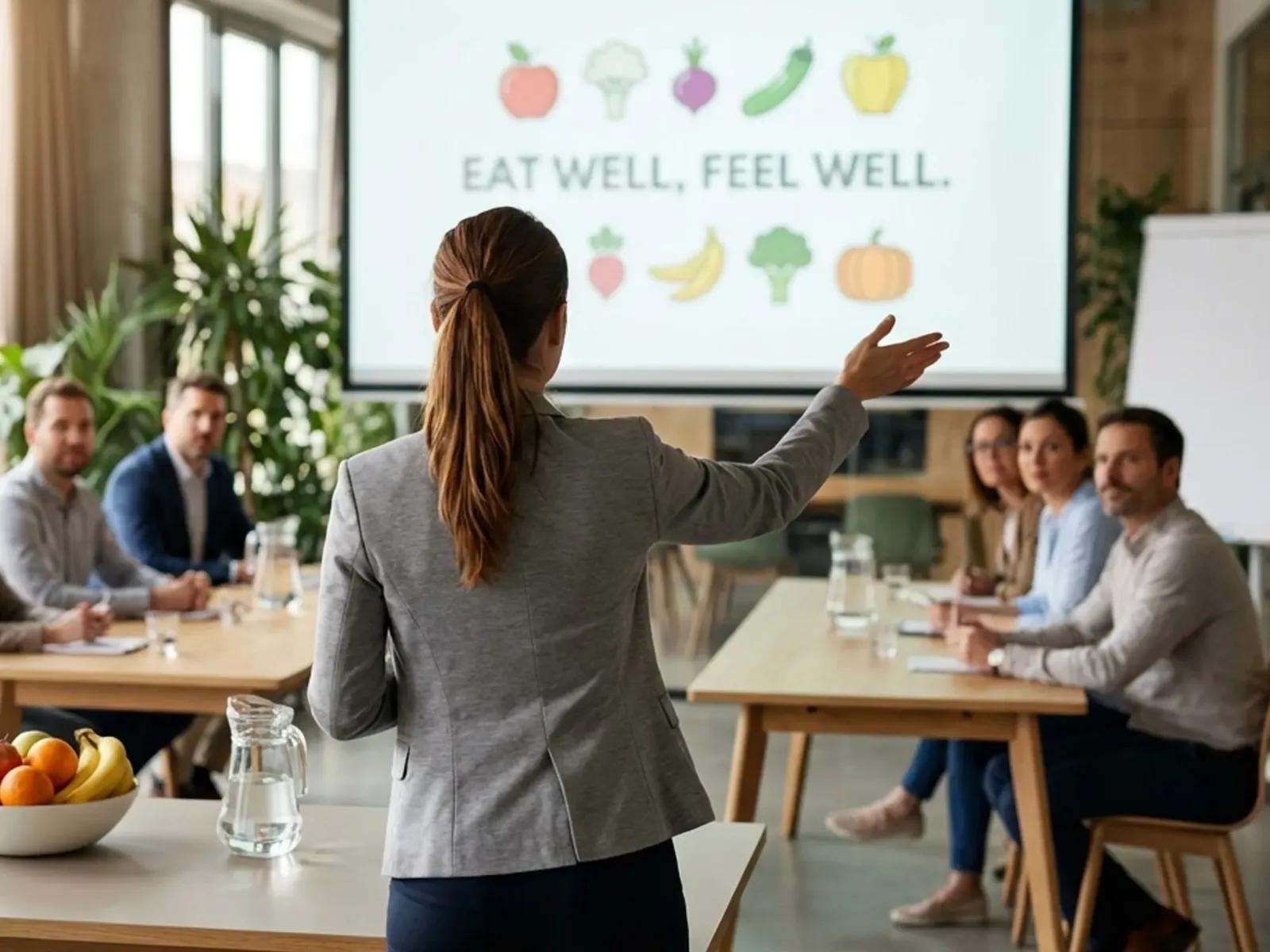
Healthy Eating & Lifestyle
Building healthier lifestyle habits for a healthier workforce.
Objective
To empower employees with practical knowledge, skills, and behavioral strategies to adopt healthier eating habits, improve daily lifestyle choices, maintain a healthy weight, and enhance overall physical wellbeing through sustainable behavior change.
More >>
Target Audience
All Employees (across organizational levels), particularly employees seeking to improve their nutritional habits, physical activity, weight management, and overall health.
Format
Interactive Health & Nutrition Workshop
Healthy Lifestyle Seminar
Experiential Learning & Group Coaching
Personalized Lifestyle Coaching
Workplace Healthy Habit Transformation Program
Duration
2–4 hours (Workshop / Seminar)
4–8 weeks (Structured Lifestyle Behavior Change Program)
Key Topics
Understanding Healthy Eating & Nutrition Basics
Mindful Eating & Hunger Awareness
Emotional Eating & Craving Management
Healthy Weight Management Without Extreme Dieting
Building Balanced & Sustainable Eating Habits
Physical Activity & Active Lifestyle
Sleep, Recovery & Metabolic Health
Managing Lifestyle-Related Health Risks
Building Long-Term Healthy Lifestyle Habits
Expected Outcomes
Participants will be able to:
Understand the fundamentals of balanced nutrition and healthy eating.
Make healthier and more conscious food choices in daily life.
Develop better awareness of hunger, fullness, cravings, and emotional eating triggers.
Apply sustainable strategies for healthy weight management.
Increase daily physical activity and adopt healthier movement habits.
Improve sleep and recovery routines.
Build consistent and sustainable healthy lifestyle behaviors.
Take greater ownership of their personal health and wellbeing.

Stress & Emotional Wellbeing
Develop emotional resilience and wellbeing to manage stress
Objective
To equip employees with practical psychological skills and emotional management strategies to recognize and manage stress, regulate emotional responses, strengthen self-awareness, and develop healthier ways of coping with personal and workplace challenges.
More >>
Target Audience
All Employees (across organizational levels), particularly those seeking to improve emotional wellbeing, stress management skills, self-awareness, and interpersonal relationships.
Format
Interactive Workshop / Seminar
Experiential Learning & Psychological Skills Training
Group Coaching
Mindfulness & Guided Relaxation Sessions
Structured Emotional Wellbeing Development Program
Duration
2–4 hours (Workshop / Seminar)
4–8 weeks (Structured Emotional Wellbeing Program)
Key Topics
Understanding Stress & Its Impact on Mind and Body
Emotional Awareness & Self-Regulation
Understanding Emotional Triggers & Behavioral Responses
Practical Stress Management Techniques
Mindfulness & Present-Moment Awareness
Cognitive Reframing & Positive Thinking Skills
Self-Compassion & Psychological Flexibility
Healthy Coping Strategies for Life’s Daily Challenges
Building Healthy Interpersonal Relationships & Emotional Communication
Developing Sustainable Emotional Wellbeing Practices
Expected Outcomes
Participants will be able to:
Recognize personal stressors and understand their impact on emotional and psychological wellbeing.
Develop greater emotional awareness and self-understanding.
Apply practical techniques to regulate emotions and manage stress.
Identify emotional triggers and develop healthier behavioral responses.
Use mindfulness and relaxation techniques to support emotional balance.
Develop more constructive thinking patterns when facing challenging situations.
Strengthen self-compassion and psychological flexibility.
Improve emotional communication and interpersonal relationships.
Establish sustainable practices to maintain emotional wellbeing in everyday life.

Energy & Productivity
ncrease energy and sharpen focus through healthier daily habits, while building sustainable productivity and better workplace performance.
Objective
To help employees optimize their physical and mental energy, improve focus and concentration, and develop sustainable daily habits that support cognitive performance, work efficiency, and overall productivity.
More >>
Target Audience
All Employees (across organizational levels), particularly those seeking to improve energy levels, concentration, work performance, and daily productivity.
Format
Interactive Workshop / Seminar
Experiential Learning & Skills Training
Group Coaching
Guided Energy Management Sessions
Structured Productivity & Habit Development Program
Duration
2–4 hours (Workshop / Seminar)
4–8 weeks (Structured Behavior Change Program)
Key Topics
Understanding Physical & Mental Energy at Work
The Science of Focus, Attention & Cognitive Performance
Managing Energy Throughout the Workday
Sleep Quality, Recovery & Restorative Habits
Nutrition & Hydration for Sustained Energy
Movement, Physical Activity & Active Breaks
Managing Digital Distractions & Improving Concentration
Focus Management, Prioritization & Productive Work Habits
Managing Mental Fatigue & Cognitive Overload
Building Sustainable Daily Routines for Better Performance
Expected Outcomes
Participants will be able to:
Understand the relationship between lifestyle habits, energy levels, and work performance.
Recognize personal factors that influence physical and mental fatigue.
Apply practical strategies to maintain energy throughout the workday.
Develop healthier sleep, nutrition, hydration, and movement habits.
Improve focus, attention, and concentration through practical techniques.
Manage digital distractions and reduce unnecessary cognitive overload.
Apply effective prioritization and daily work planning strategies.
Establish sustainable routines that support consistent energy and productivity.
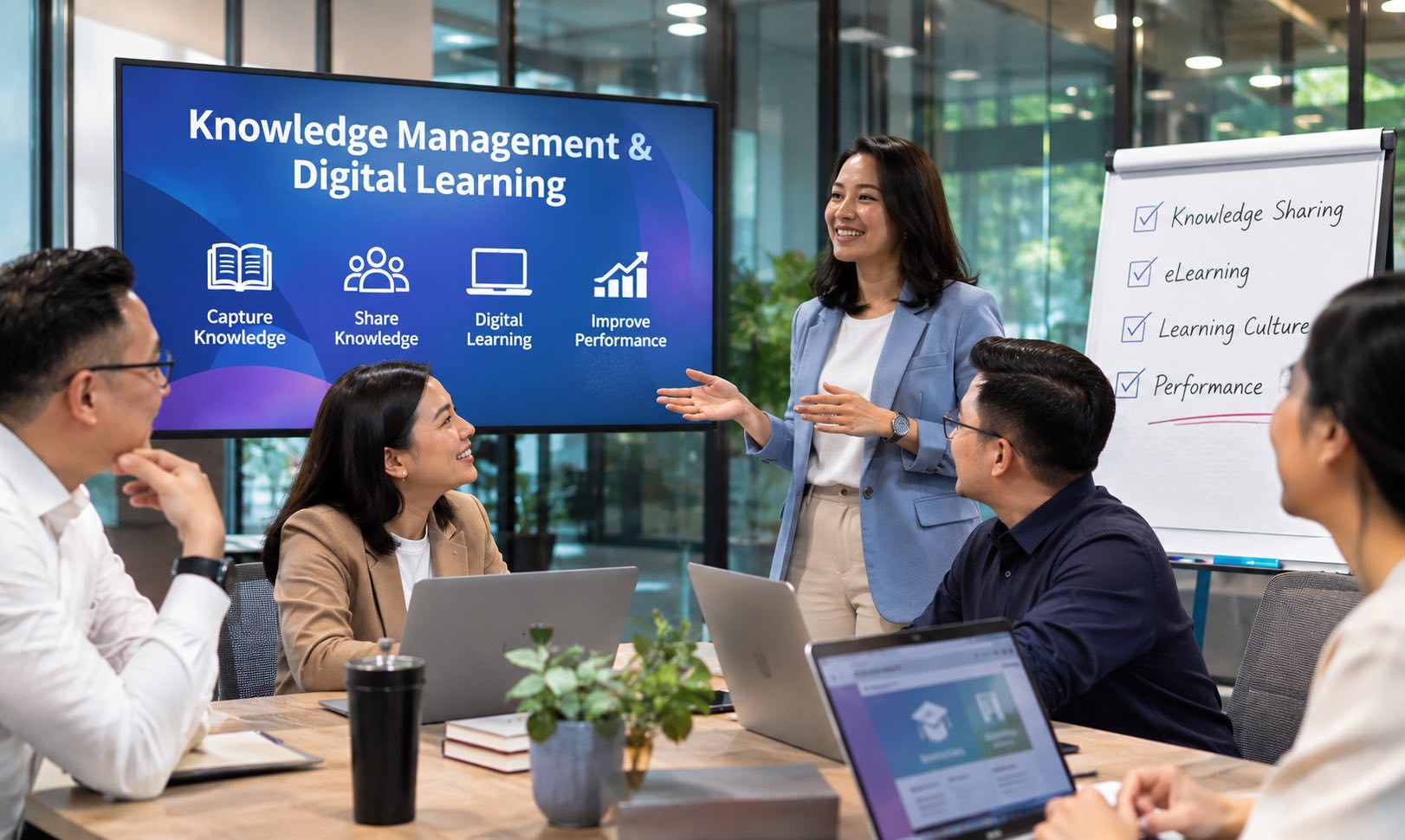
Knowledge Management & Digital Learning
Empowering organizations to capture, share, and leverage knowledge for continuous learning and sustainable growth.
Objective
To empower organizations to build a sustainable learning culture through effective knowledge management and digital learning solutions. Enhancing employee competencies, knowledge sharing, and continuous professional development.
More >>
Target Audience
HR Directors & Human Resources Managers
Learning & Development (L&D) Managers
Training & Development Professionals
Knowledge Management Officers
Department Heads & Team Leaders
Corporate Trainers & Subject Matter Experts
All Employees involved in organizational learning and knowledge sharing.
Format
Interactive Workshop / Seminar
Knowledge Management Training
Digital Learning & eLearning Development
Train-the-Trainer Program
Learning Experience Design (LXD) Workshop
Corporate Knowledge Sharing Sessions
Customized Organizational Learning & Development Program
Duration
2–4 hours (Workshop / Seminar)
1–2 days (Intensive Training)
4–8 weeks (Structured Knowledge Management & eLearning Implementation Program)
Key Topics
Understanding Knowledge Management & Organizational Learning
Building a Knowledge-Sharing Culture
Knowledge Capture, Documentation & Organizational Memory
Developing Standard Operating Procedures (SOPs) & Knowledge Repositories
Digital Learning Strategy & eLearning Development
Learning Management Systems (LMS) & Digital Learning Platforms
Instructional Design & Learning Experience Design
Microlearning, Gamification & Interactive Learning
AI-Powered Learning & Knowledge Management
Measuring Learning Effectiveness & Training Impact
Expected Outcomes
Organizations and participants will be able to:
Develop a better understanding of knowledge management and its strategic value.
Establish effective knowledge-sharing practices across departments and teams.
Capture, document, and preserve critical organizational knowledge.
Develop structured digital learning content and resources.
Utilize eLearning platforms and digital tools to support employee development.
Design engaging and accessible learning experiences.
Leverage AI and technology to improve knowledge accessibility and learning efficiency.
Strengthen employee competencies through continuous learning initiatives.
Improve knowledge retention, transfer, and practical application.
Establish measurable learning and development strategies aligned with organizational goals.
Knowledge Creates Growth. Learning Drives Transformation.
Helping organizations turn individual knowledge into collective intelligence through digital learning, knowledge management, and continuous development.
MINDENERGETIC